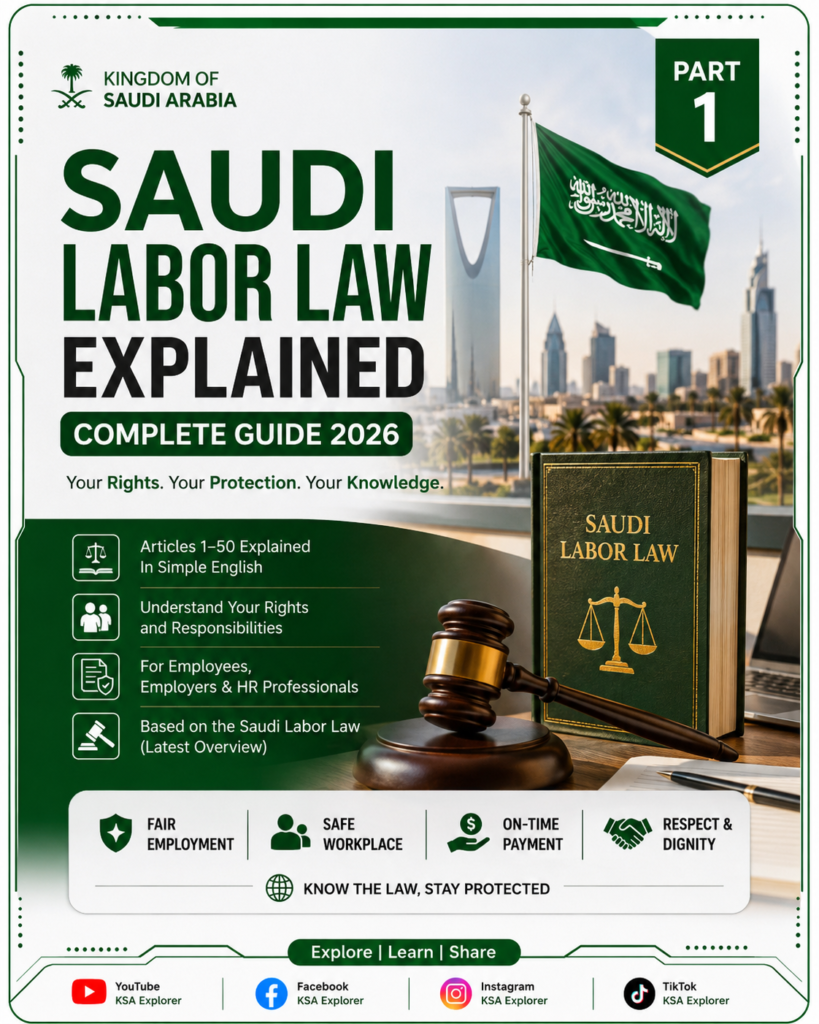
Are you working in Saudi Arabia as a Domestic Worker, or are you planning to hire one? Understanding the legal rights, responsibilities, and employment regulations for domestic workers is essential. Unlike employees in the private sector, domestic workers are governed by a separate set of regulations in Saudi Arabia.
This guide explains everything you need to know about domestic workers’ rights, employer obligations, employment contracts, working conditions, and important legal considerations.
Who is Considered a Domestic Worker in Saudi Arabia?
Domestic workers are individuals employed to provide household-related services. Common occupations include:
- House Maid
- Private Driver
- Housekeeper
- Cook
- Gardener
- Caregiver
- Nanny
- Home Security Guard
- Family Chauffeur
- Other household support staff
These workers are generally employed by individuals or families rather than companies.
Which Law Applies to Domestic Workers?
Domestic workers in Saudi Arabia are governed by the Domestic Workers Regulation, which differs from the general Saudi Labor Law.
This means that some provisions of the Saudi Labor Law, including certain articles that apply to private-sector employees, do not automatically apply to domestic workers. Instead, their employment relationship is regulated by specific rules designed for household employment.
Rights of Domestic Workers
Every domestic worker should be aware of the following rights:
1. Written Employment Contract
A clear written contract should specify:
- Job title
- Salary
- Working location
- Duties and responsibilities
- Leave entitlement
- Contract duration
- Other agreed terms
Always keep a copy of your signed contract.
2. Timely Salary Payment
The employer should pay the agreed salary on time according to the employment contract.
Workers should maintain salary records or bank transfer receipts whenever possible.
3. Daily Rest
Domestic workers are entitled to adequate daily rest according to the applicable regulations and employment agreement.
Proper rest is important for health, safety, and productivity.
4. Respect and Dignity
Every domestic worker has the right to be treated with dignity and respect.
Any form of abuse, harassment, or inhumane treatment should not be tolerated.
5. Accommodation and Basic Needs
Where applicable, employers should provide:
- Suitable accommodation
- Necessary living facilities
- Food or food allowance, depending on the employment agreement
- Appropriate working conditions
6. Medical Care
Employers should ensure access to necessary medical treatment when required according to applicable regulations and the employment agreement.
Responsibilities of Domestic Workers
Domestic workers also have important responsibilities, including:
Follow the Employment Contract
Workers should perform only the duties agreed upon in the contract.
Perform Duties Professionally
Employees should:
- Be punctual
- Work honestly
- Complete assigned tasks responsibly
- Maintain professionalism
Respect Employer’s Privacy
Domestic workers should respect:
- Family privacy
- Personal belongings
- Household information
Confidentiality is an important part of household employment.
Protect Property
Workers should take reasonable care of household equipment, furniture, vehicles, and other property.
Follow Legal Procedures
Domestic workers should not leave employment without following the legal procedures established under Saudi regulations.
If a dispute arises, legal channels should always be used.
Employer Responsibilities
Employers should:
- Provide a written employment contract.
- Pay salaries on time.
- Treat workers respectfully.
- Provide suitable accommodation where applicable.
- Avoid abuse or harassment.
- Respect workers’ legal rights.
- Follow Saudi regulations regarding domestic employment.
Important Tips for Domestic Workers
Before accepting any job:
- Read the contract carefully.
- Understand your salary and benefits.
- Keep copies of important documents.
- Save your employer’s contact details.
- Keep emergency contact numbers.
- Learn your legal rights.
What Should You Do if a Dispute Occurs?
If disagreements arise between the employer and domestic worker:
- Try to resolve the issue through communication.
- Keep copies of contracts and salary records.
- Contact the relevant Saudi authorities if necessary.
- Follow official legal procedures instead of leaving employment unlawfully.
Why Knowing Your Rights Matters
Understanding your legal rights helps you:
- Protect your employment.
- Avoid legal problems.
- Maintain a professional relationship with your employer.
- Resolve disputes more effectively.
- Build a successful career in Saudi Arabia.
Knowledge of Saudi regulations benefits both employers and domestic workers.
Disclaimer
This article is intended for general informational purposes only and should not be considered legal advice. Employment regulations may change over time, and individual cases may vary. For official guidance, always refer to the Saudi Ministry of Human Resources and Social Development (HRSD) or consult the relevant authorities.
Follow KSA Explorer
KSA Explorer provides trusted information on:
- Saudi Labor Laws
- Domestic Worker Regulations
- Qiwa Updates
- Iqama Rules
- Exit & Re-Entry Visa Information
- Final Exit Rules
- Saudi Jobs
- Visa News
- Daily Saudi Arabia Updates
Stay connected with KSA Explorer for reliable information that helps expatriates live and work in Saudi Arabia.
SEO Keywords
Domestic Workers Saudi Arabia, Saudi Domestic Worker Rules, Saudi Arabia Domestic Workers Regulation, House Maid Rights Saudi Arabia, Private Driver Rules Saudi Arabia, Caregiver Jobs Saudi Arabia, Housekeeper Rights KSA, Domestic Worker Contract Saudi Arabia, Domestic Worker Salary Rules, Saudi Employment Guide, Saudi Labor Law for Domestic Workers, Musaned Saudi Arabia, HRSD Saudi Arabia, Domestic Worker Rights 2026, KSA Explorer.